
When it comes to protecting your home from water damage, few systems are as critical (and often overlooked) as your gutters and downspouts. Understanding how to connect gutter downspouts properly ensures that rainwater is safely directed away from your home, preserving your foundation, siding, and roof system.
At Gutter Helmet of Southeast Michigan, gutter performance isn’t just about installation. We focus on creating comprehensive water management systems that work seamlessly with your roof. Backed by decades of experience and proven results, we help homeowners across Southeast Michigan extend the lives of their homes.
In this guide, we break down our years of hands-on experience into clear, practical insights so you can understand exactly how downspout connections work and why they matter. Whether you’re planning a DIY project or considering professional installation, you’ll gain the knowledge needed to make confident, informed decisions about your home.
Ready to ensure your gutter system is performing at its best? Connect with us today at 231-267-4030 or contact us online to schedule a free estimate and get expert guidance from trusted professionals.
Why Downspouts Matter for Your Home’s Drainage System
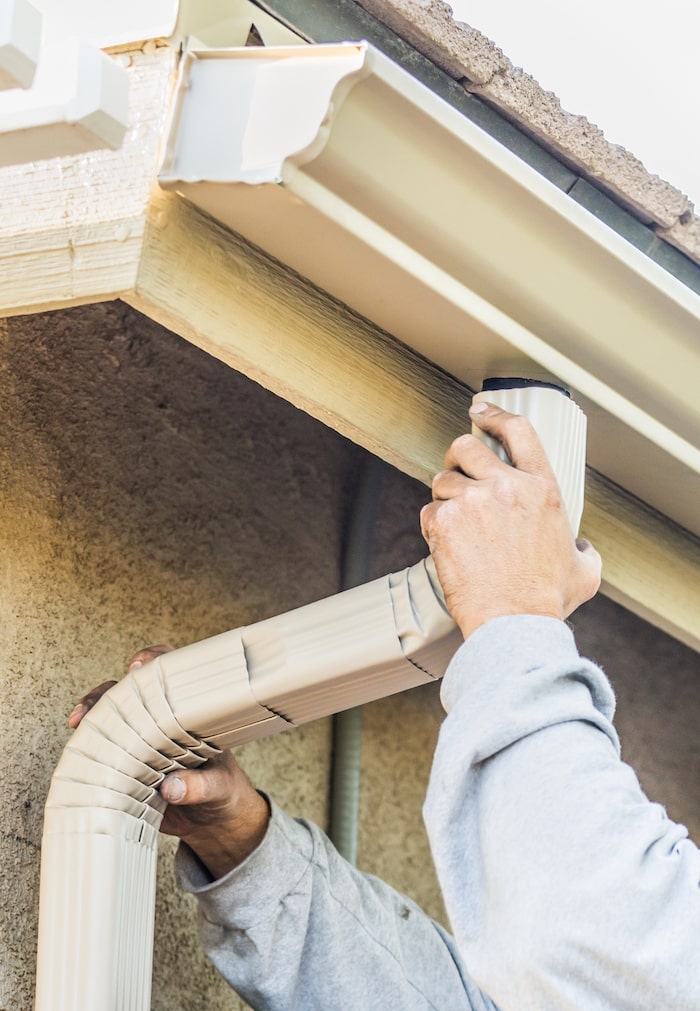
Downspouts are the vertical pipes attached to your gutter system that carry water safely from the roof down to the ground and away from your home’s foundation. They are a critical component of your home’s overall drainage system, ensuring that water doesn’t simply spill over the edges of your gutters or pool around your home.
Without properly connected and functioning downspouts, water can accumulate near your foundation and lead to serious structural issues over time.
Key Benefits of Properly Connected Downspouts
- Direct water safely away from your foundation
- Help prevent basement flooding and moisture intrusion
- Reduce soil erosion and protect landscaping
- Protect siding, fascia, and exterior finishes
- Support the overall performance and lifespan of your roof system
According to the Federal Emergency Management Agency (FEMA), improper drainage and water intrusion are leading contributors to long-term structural damage in residential properties.
How Gutters and Downspouts Work Together
Your gutters are just one part of a broader gutter system, an integrated water management system comprising interplaying parts that work together to collect, channel, and divert water away from your home.
The System Includes:
- Gutters (collect water from the roof)
- Downspouts (channel water downward)
- Extensions or drainage systems (move water away from the home)
If one component fails, the entire system becomes less effective. That’s why proper installation and maintenance are critical.
Why Homeowners Need to Connect or Reconnect Downspouts
Many homeowners search for how to connect gutter downspouts because they’re dealing with a drainage issue or trying to prevent one. Since downspouts are the final step in moving water away from your home, even small connection issues can lead to bigger problems.
Common Reasons to Connect Gutter Downspouts
- New Gutter Installation
Ensuring proper drainage when installing or upgrading a gutter system - Damage or Wear Over Time
Repairing or replacing loose, disconnected, or deteriorating sections - Upgrading for Better Performance
Improving water flow with larger downspouts or added extensions - Correcting Poor Installation
Fixing improper alignment, slope, or placement from previous installs
Step-by-Step: How to Connect Gutter Downspouts
1. Plan the Downspout Layout
Start by mapping the path from the gutter outlet to the ground.
Best practices:
- Ensure water will flow at least 4–6 feet away from the foundation
- Avoid placing downspouts near entryways or walkways
- Plan around obstacles like windows or trim
2. Attach the First Elbow to the Gutter Outlet
The first elbow directs water from the gutter toward the wall.
- Slide the elbow onto the outlet
- Secure it with screws or rivets
- Align it carefully for proper flow
3. Create an Offset (If Needed)
If the gutter doesn’t align with the wall, use two elbows and a short connector piece.
- Measure the distance between gutter and wall
- Cut a section of downspout
- Connect the elbows securely
4. Install the Vertical Downspout Section
Attach the main vertical pipe.
- Measure from elbow to ground
- Cut to size
- Secure to the elbow
Ensure the pipe is straight for optimal water flow.
5. Secure the Downspout to the Structure
Proper fastening is essential for durability.
- Install brackets every 6–10 feet
- Anchor into studs or solid backing
- Keep the downspout stable without crushing it
6. Add a Bottom Elbow and Extension
Direct water away from your home at the base.
- Install a 45° or 90° elbow
- Add an extension or splash block
- Ensure water flows away from the foundation
The National Association of Home Builders (NAHB) recommends discharging water at least 5 feet away from your home.
Why Downspouts Are Essential to Roof System Performance
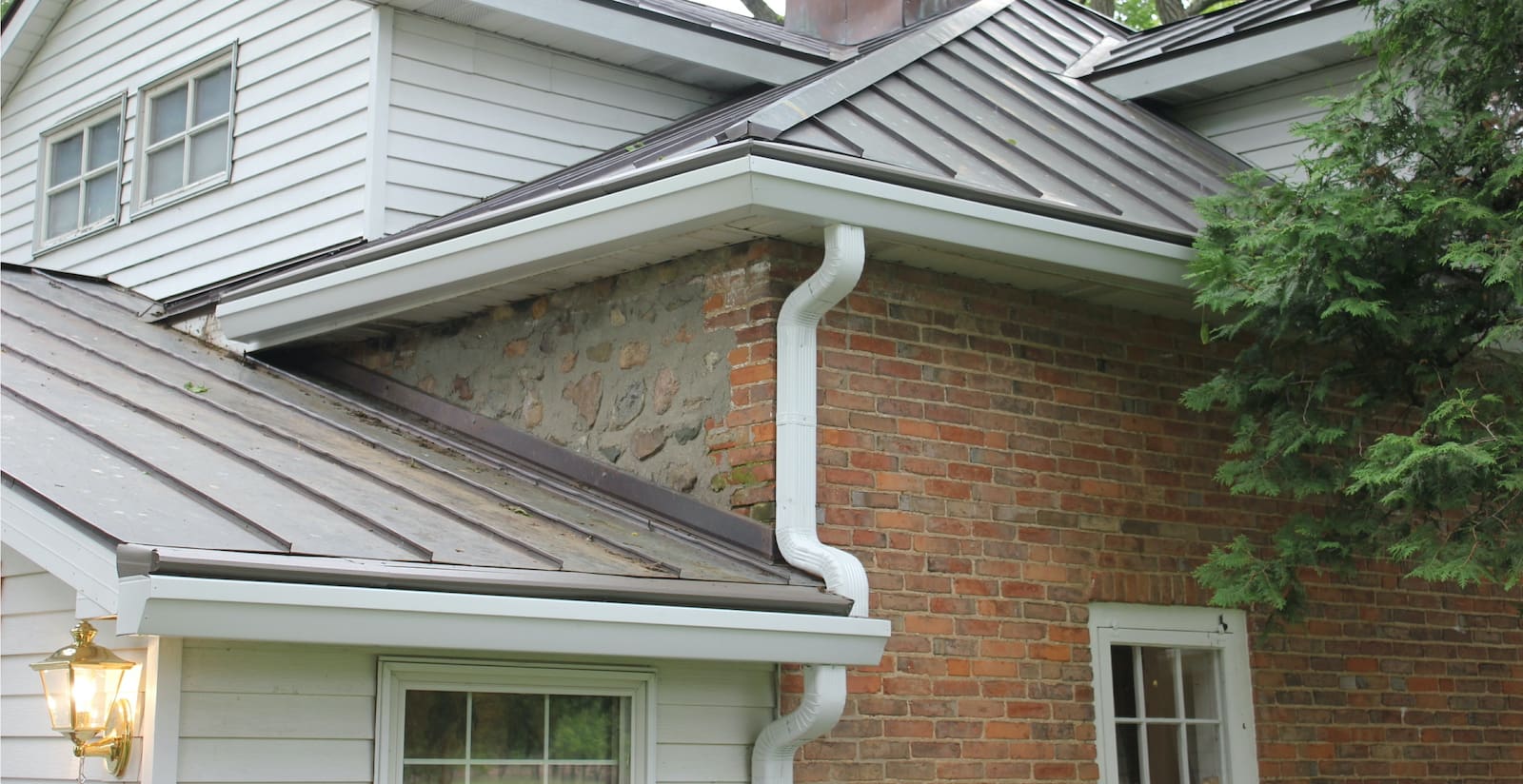
Your roof doesn’t end at the shingles; it includes everything that manages water flow.
How Downspouts Support Your Roof System
- Prevent water backup under shingles
- Reduce ice dam formation in colder climates
- Protect fascia and soffits from rot
- Maintain structural integrity of roofing components
This is why gutter and downspout systems should always be considered part of your overall roofing system.
Choosing the Right Materials
The material you choose for your downspouts plays a major role in durability, performance, and long-term value. The right option improves water flow and reduces maintenance, extending the lifespan of your entire gutter system.
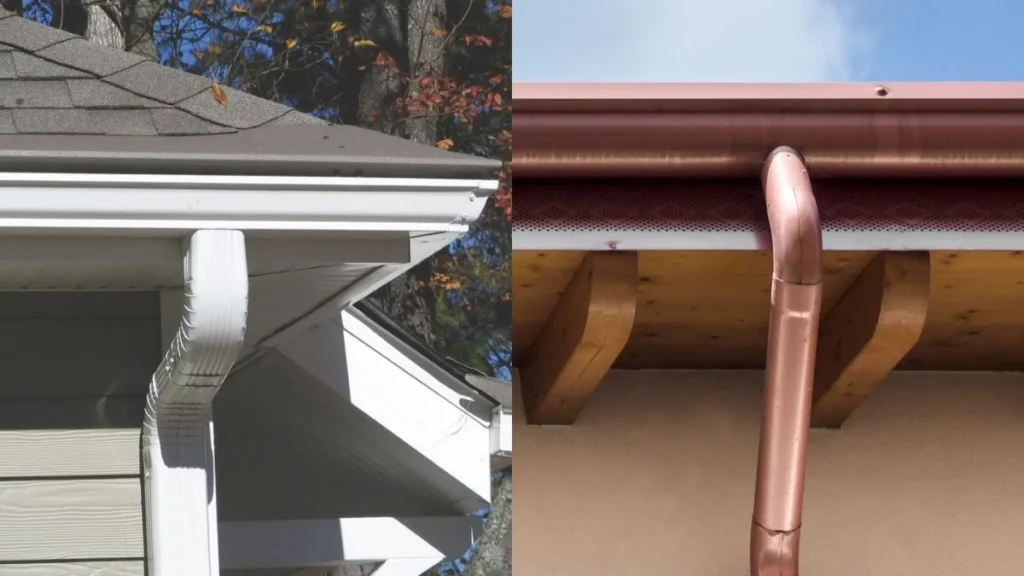
Aluminum
- Lightweight and rust-resistant
- Cost-effective and widely used
- Easy to install and maintain
Copper
- Premium aesthetic appeal
- Extremely durable and long-lasting
- Naturally corrosion-resistant
Proper Sizing and Styles for Maximum Performance
Choosing the right size and style is essential to ensure your gutter and downspout system can handle heavy rainfall and efficiently move water away from your home. An undersized system can quickly become overwhelmed, leading to overflow and potential damage.
Common Downspout Sizes
- 2×3 inches (standard capacity)
- 3×4 inches (higher capacity for larger roofs)
Gutter Styles That Impact Flow
- K-Style Gutters (Most Common)
Designed with a flat back and decorative front, K-style gutters offer strong water capacity and are widely used on residential homes - Box Gutters (Higher Capacity Systems)
Ideal for larger homes or modern designs, box gutters handle higher volumes of water and perform well in areas with heavy rainfall - Half-Round Gutters (Smooth Flow & Classic Design)
Featuring a rounded shape, half-round gutters promote smoother water flow and are less prone to debris buildup, making them a great option to balance performance and aesthetics
Seamless Gutters and Downspout Efficiency
Seamless gutters are designed to improve the performance of your entire drainage system by minimizing joints and potential failure points. When paired with properly connected downspouts, they help ensure consistent water flow from your roof to the ground.
Key Benefits
- Reduced leaks and weak points
Fewer seams mean fewer opportunities for water to escape - Improved water flow
Smooth, continuous design allows for more efficient drainage - Lower maintenance requirements
Less buildup of debris and fewer areas prone to clogging
Common Mistakes to Avoid
Improper installation or overlooked details can significantly reduce the effectiveness of your gutter and downspout system—leading to water damage, drainage issues, and costly repairs over time.
Avoid These Common Issues
- Misaligned elbows restricting water flow
Poor alignment can slow or block water movement, causing backups and overflow - Loose connections causing leaks
Unsecured joints allow water to escape before it reaches the ground - Downspouts terminating too close to the foundation
Water that isn’t directed far enough away can lead to foundation damage and basement moisture - Undersized systems for your roof area
Systems that can’t handle your roof’s water volume are more likely to overflow during heavy rain
When to Call a Professional
While some homeowners may be able to handle basic downspout connections, professional installation ensures your entire system is properly designed, aligned, and built for long-term performance. This is especially important when your home’s drainage needs go beyond a simple fix.
Consider Professional Help If:
- Your home has multiple stories
Increased height adds complexity and safety concerns - You’re upgrading to seamless gutters
Requires precise measurements and specialized equipment - You’re experiencing drainage issues
Ongoing problems may indicate larger system design flaws - You want a fully optimized system
Professionals ensure every component works together efficiently
The Gutter Helmet Difference: Why Homeowners Choose Us
When it comes to protecting your home, we know that experience and system design make all the difference. At Gutter Helmet of Southeast Michigan, we don’t take a one-size-fits-all approach—we focus on building complete, high-performing systems that are designed to last.
What Sets Us Apart
- Complete system approach
We design gutters, downspouts, and protection systems to work together seamlessly for maximum performance - Expert installation
Our team ensures proper alignment, secure connections, and efficient drainage from day one - Long-term protection
We build systems that are designed to prevent clogs, reduce upkeep, and protect your home year after year
At GHM, we don’t just install gutters. We design integrated water management systems that protect your home from top to bottom.
Protect Your Home Today with Professional Downspout Installation
Understanding how to connect gutter downspouts is essential for protecting your home from water damage, but it’s only one part of a larger system. Your gutters, downspouts, and roof must all work together to effectively manage rainwater.
At Gutter Helmet of Southeast Michigan, we focus on delivering complete solutions that protect your home long-term. From material selection to expert installation, we design every detail to ensure performance, durability, and peace of mind.
Ready to upgrade your gutter system? Reach out today at 231-267-4030 or contact us online for a free estimate and experience the Gutter Helmet difference.
FAQ: How to Connect Gutter Downspouts
Q: How do you connect gutter downspouts properly?
Attach an elbow to the gutter outlet, connect the vertical downspout with screws or rivets, and secure it with brackets. Finish with a bottom elbow and extension to direct water away from your home.
Q: How far should downspouts extend from the house?
Downspouts should extend at least 4 to 6 feet away from your foundation to prevent water damage and soil erosion.
Q: What is the best angle for downspout elbows?
Most systems use 45-degree or 90-degree elbows to create a smooth path that allows water to flow efficiently.
Q: Can I connect two downspouts together?
Yes, but the system must be properly sized to handle the combined water flow to prevent overflow or backups.