
REQUEST A FREE QUOTE TODAY
Properly-sized gutters and downspouts are essential for protecting your home from water damage. Understanding how to size gutters and downspouts ensures your system can handle heavy rainfall, prevent overflow, and safeguard your foundation. This guide covers everything from materials and styles to maintenance, repair, and professional installation.
Whether you’re building a new home or upgrading an existing system, knowing how to size gutters and downspouts correctly will protect your home and increase its long-term value. If you’re in Southeast Michigan, Gutter Helmet of Southeast Michigan can provide expert guidance and installation services.
Call (231)-267-4030 or fill out our online form to schedule a free consultation.
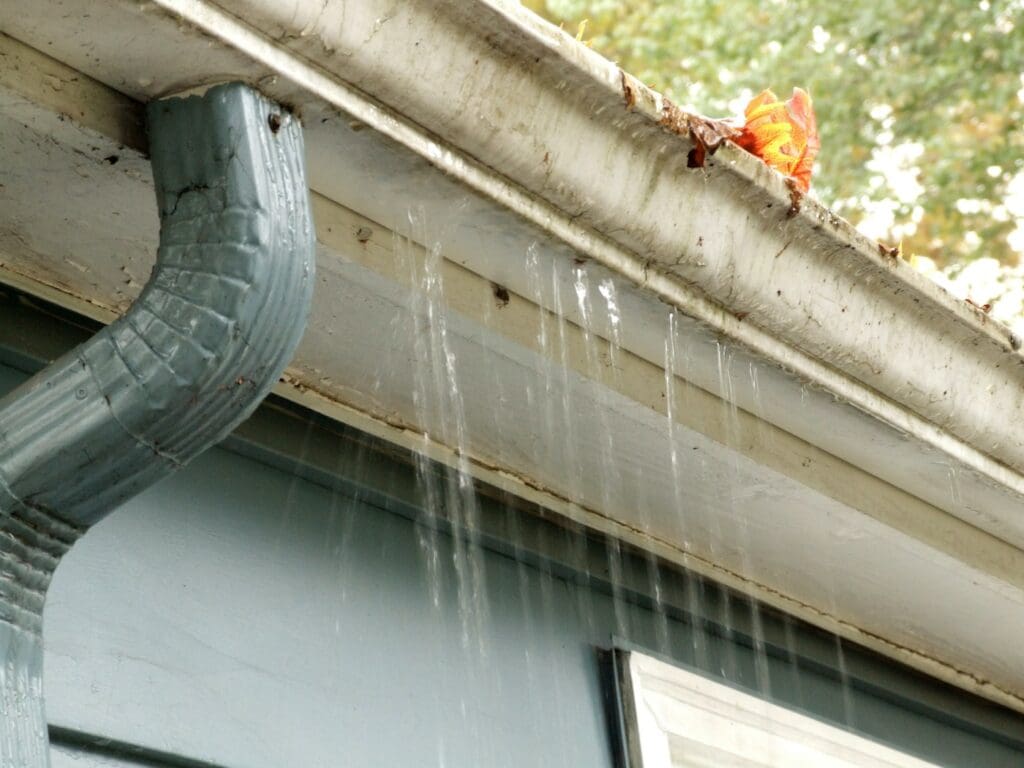
Gutters are channels along your roofline that collect rainwater and direct it to downspouts. Learning how to size gutters and downspouts properly ensures water is effectively removed from your roof, preventing structural damage and basement flooding.
Gutter benefits include:
Downspouts carry water from gutters to safe drainage areas. Even with correctly-sized gutters, improperly-sized downspouts can cause overflow and foundation damage.
Understanding how to size gutters and downspouts ensures that both gutters and downspouts work efficiently together.
Downspout functions:
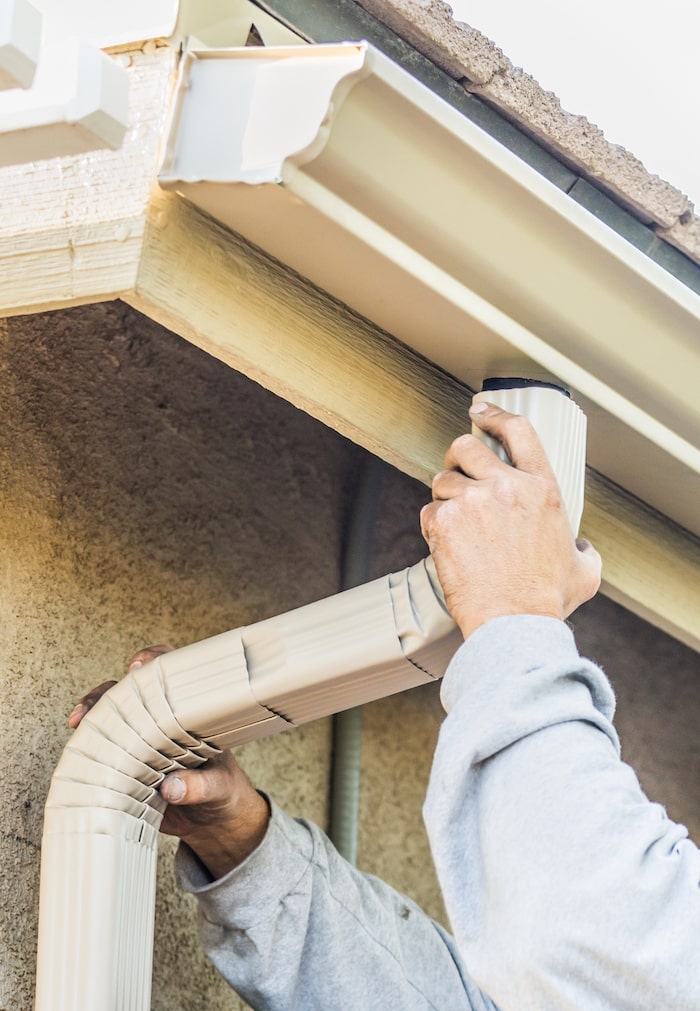
Homes without gutters are at a much higher risk of water-related damage. When rainwater falls directly from the roof edge:
In short, gutters act as a critical first line of defense that protects your home’s structure and your investment.
What Is a Drainage Area?
A drainage area is the portion of your roof that collects rainwater and directs it into your gutters. Essentially, it’s the total surface area from which water will flow during a storm. Larger drainage areas generate more water, which means your gutters and downspouts must be sized to handle the increased volume. Understanding your drainage area is crucial for preventing overflow, basement flooding, and foundation damage.
Example: A 30×40 ft roof with a 6:12 pitch = 1,200 sq ft × 1.1 = 1,320 sq ft effective drainage area.
Selecting the correct gutter size is critical to ensure your system can handle your roof’s drainage area. When homeowners learn how to size gutters and downspouts, gutter width, style, and material all play a role in preventing overflow, protecting your home, and minimizing maintenance.
Gutter width determines how much water can flow through before spilling over. The most common residential sizes are:
Tip: When in doubt, choosing the next larger standard size is safer, especially in regions prone to heavy rain, ice, or snow.
Gutter style affects both performance and appearance. Common options include:
Material choice affects durability, maintenance, and long-term performance. Common options include:
Choosing the right combination of width, style, and material is essential when learning how to size gutters and downspouts. Correctly matched components ensure the system functions efficiently, requires less maintenance, and protects your home from water damage.
Downspouts are just as critical as gutters when learning how to size gutters and downspouts. Even the best gutters will fail if downspouts cannot handle the water flow.
Proper placement ensures water is directed safely away from your foundation:
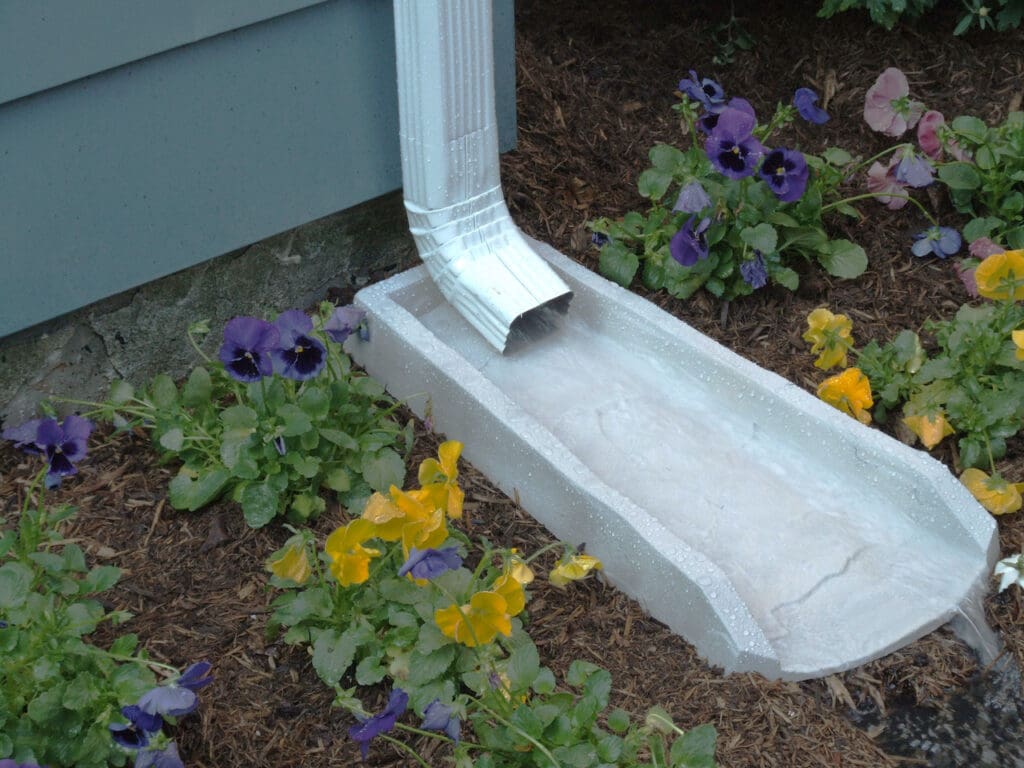
Even properly-sized gutters and downspouts require inspection and occasional repair. Knowing how to size gutters and downspouts also helps you identify when a system is failing.
Replacing old gutters with a correctly-sized system can save thousands in water damage repairs over time.
Proper maintenance ensures your gutters and downspouts continue to function efficiently. Maintenance is particularly important after understanding how to size gutters and downspouts, because even correctly-sized systems fail if neglected.
While some repairs and cleaning can be handled by homeowners, learning how to size gutters and downspouts is often best paired with professional installation. Proper installation ensures your investment performs as expected for years.
Benefits of professional installation:
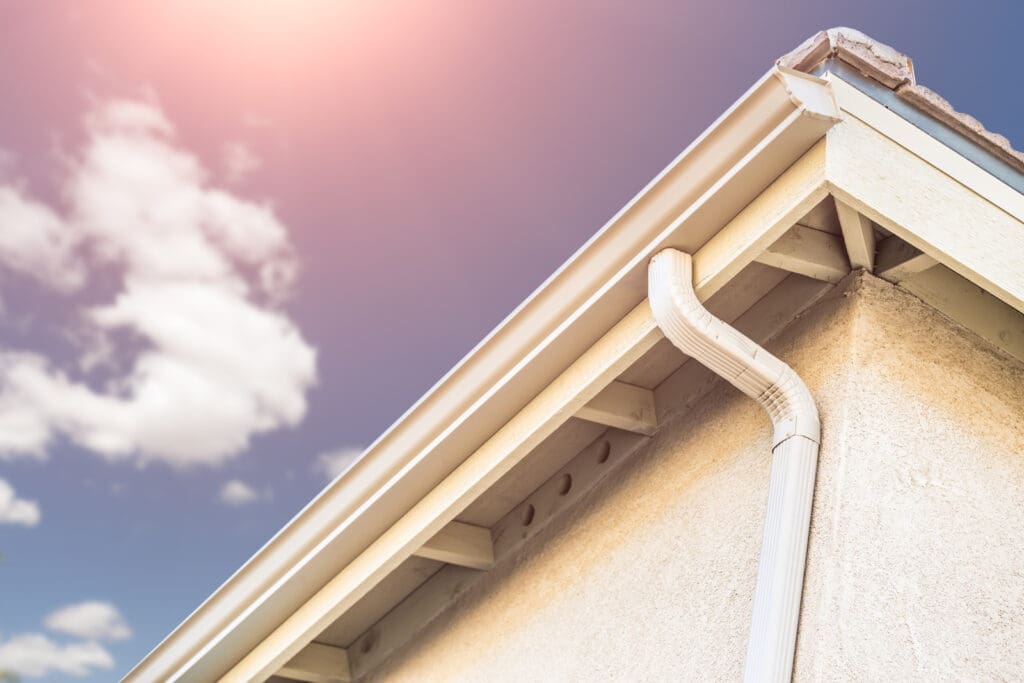
Protecting your home from water damage starts with a properly-sized and installed gutter system.
At Gutter Helmet of Southeast Michigan, we provide professional solutions tailored to each home, combining expert knowledge, durable materials, and innovative designs to ensure your gutters and downspouts perform efficiently year-round.
Our team stands out thanks to our industry certifications, extensive experience, and local expertise:
Working with our qualified team means your home is protected with a system designed for efficiency, durability, and long-term value.
Call (231)-267-4030 or fill out our online form today for expert gutter and downspout sizing and installation.
How do I know what size gutters I need?
Gutter size depends on your roof’s drainage area and the amount of rainfall your region receives. For most homes, 5–6 inch K-style gutters are sufficient, but larger homes or areas with heavy rainfall may require 7-inch gutters.
What size downspouts should I use?
Downspouts are typically 2×3 inches for small to medium homes and 3×4 inches for larger homes or steep roofs. The spacing and placement of downspouts are just as important as size; they should generally be spaced every 25–35 feet and direct water at least 5–10 feet from your foundation.
How often should gutters be cleaned?
Gutters should be cleaned at least twice a year—typically in spring and fall—or more frequently if you have overhanging trees. Installing gutter covers or protection systems can significantly reduce maintenance needs.
Can I install gutters and downspouts myself?
While some homeowners handle basic cleaning or small repairs, correctly sizing and installing gutters and downspouts is complex. Professional installation ensures accurate measurements, proper slope, and long-term durability. For homeowners in Southeast Michigan, Gutter Helmet of Southeast Michigan provides expert installation and consultation.
What happens if my gutters are too small?
Undersized gutters can overflow during heavy rain, causing foundation damage, basement flooding, and soil erosion. Properly sized gutters and downspouts prevent water from pooling near your home and protect siding, landscaping, and structural elements.
How long do gutters and downspouts last?
Lifespan depends on material, maintenance, and climate. Aluminum gutters typically last 20–30 years, steel 20–25 years (with proper coating), copper over 50 years, and vinyl 10–20 years. Proper sizing, installation, and maintenance can extend their longevity.